NSF-funded · Oklahoma State University
Tribal stories, designed in virtual worlds.
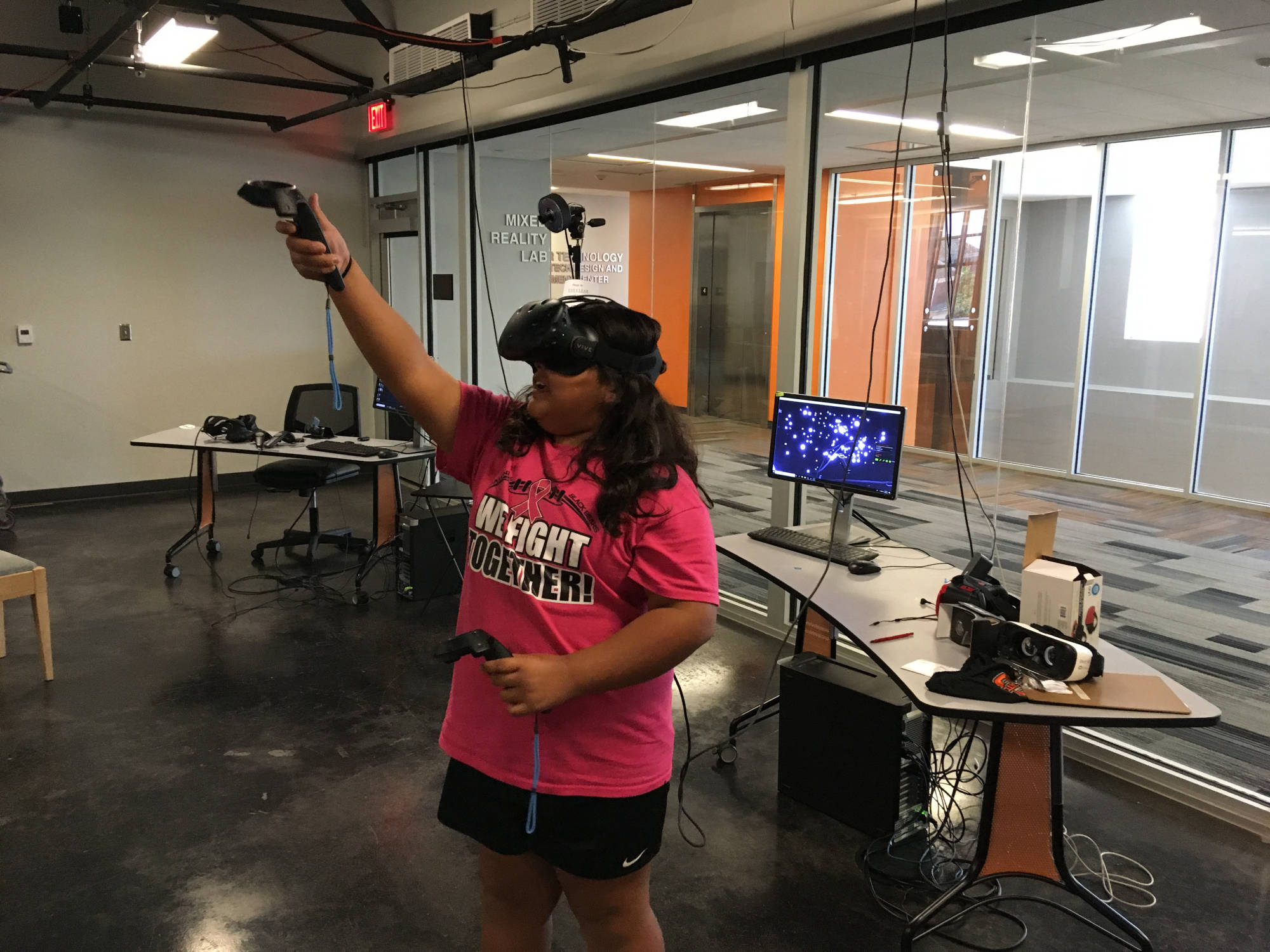
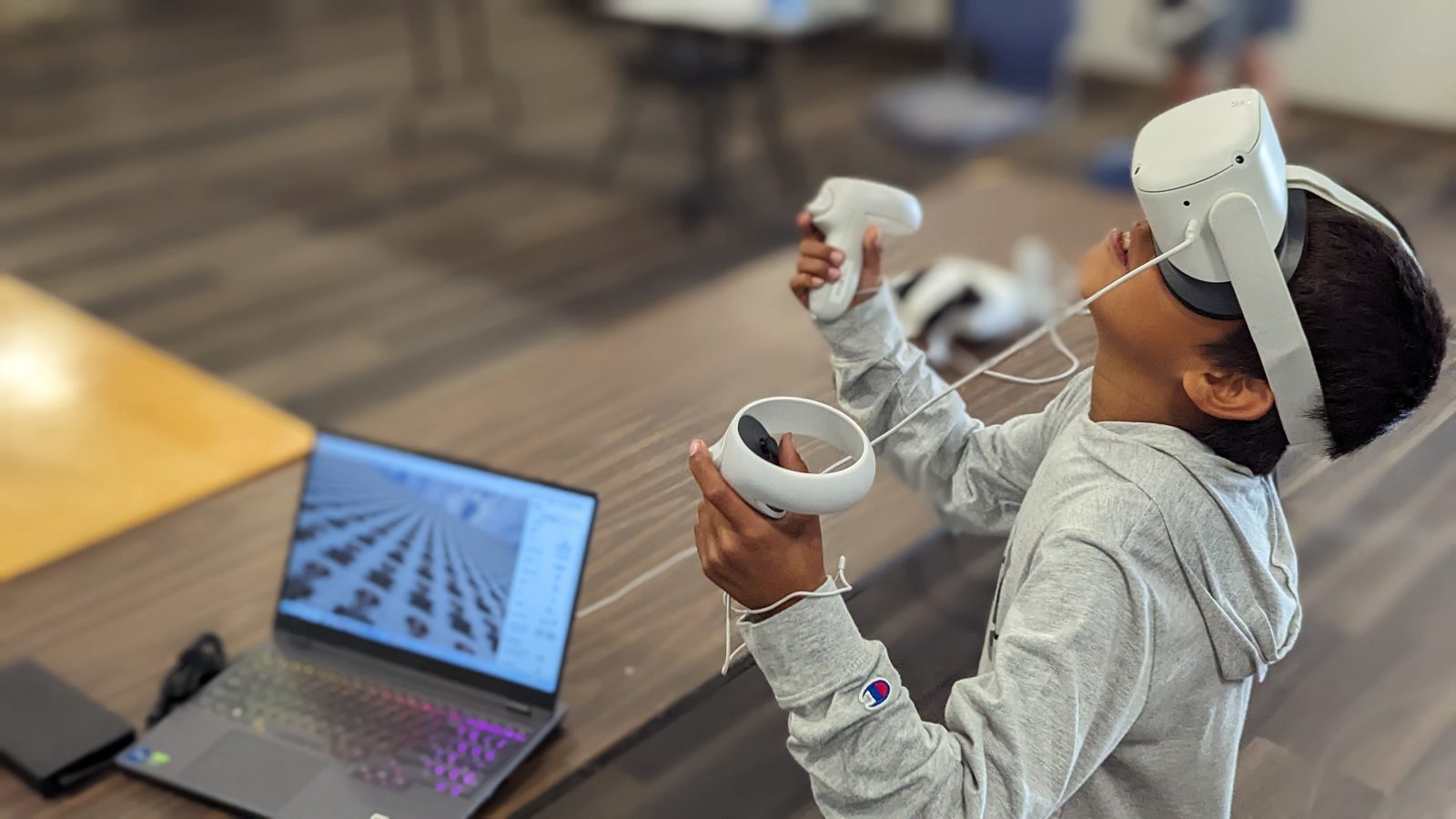
NAMSAS, the Native American Middle-school Students Afterschool STEM program, brings Virtual Reality, Augmented Reality and 3D printing into Tribal afterschool programs through spatial design activities grounded in each Nation's own stories and teachings.

About the project
Structured afterschool STEM that is relatable to both girls and boys, and rooted in culturally responsive teaching.
The NAMSAS program focuses on the design, development, and evaluation of structured afterschool STEM programs that incorporate Virtual Reality (VR), Augmented Reality (AR), and 3D printing through spatial design activities. Strategic partnerships with afterschool programs in Tribal Nations support culturally responsive teaching in technology-rich afterschool environments.
Seven design studio modules integrating these emerging technologies are disseminated on a bi-weekly basis in the fall and spring semesters over four years, including mini hackathons at the end of each semester and a larger hackathon at the end of the project.
A version of the NAMSAS curriculum was piloted with a small number of female students from the Pawnee Nation during a two-week summer program, with the generous support of the National Center for Women & Information Technology (NCWIT).
One curriculum, three stories
Each Nation tells the journey in its own words
The same seven design studios are woven into a story from each partner Nation, so every new skill arrives alongside a teaching from home.
The Prophecy of the Seven Fires
Each module is linked to one of the Seven Fires, prophecies left to the Elders about the future. Each Fire marks a change in the way of life.
Explore the 7 modules
Creation Story of the Seven Clans
Modules follow the creation story of the seven surviving clans: Bear, Beaver, Elk, Eagle, Buffalo, Pigeon and Owl.
Explore the 7 modules
Ponca Code of Ethics
Each module carries one principle of the Ponca code of ethics, first recorded in English by Ponca historian Pete LeClair in 1928.
Explore the 7 modulesThe seven modules
From a first sketch to a community hackathon
Follow any row to see how one design studio is told across the three Nations. Select a name to open that module.
Partners & support